
Understanding the Essence of Minimalist Front Yard Design
9 Minimalist Front Yard – Minimalist design, in its essence, prioritizes functionality and simplicity. It’s about stripping away the unnecessary to highlight what truly matters. This principle applies beautifully to front yard landscaping, creating a space that is both aesthetically pleasing and remarkably low-maintenance. Forget the overflowing flower beds and intricate garden layouts; minimalist front yards embrace clean lines, strategic plant placement, and durable, low-maintenance materials. The core idea is to craft an inviting and visually appealing entrance that requires minimal effort to keep looking its best.
Key Principles of Minimalist Landscaping
- Simplicity in Design: Avoid clutter and keep the layout clean and uncluttered. Focus on a few key elements rather than trying to incorporate everything at once.
- Strategic Plant Selection: Choose plants that require minimal pruning, watering, and fertilization. Native plants are often a great option as they are adapted to your local climate and soil conditions.
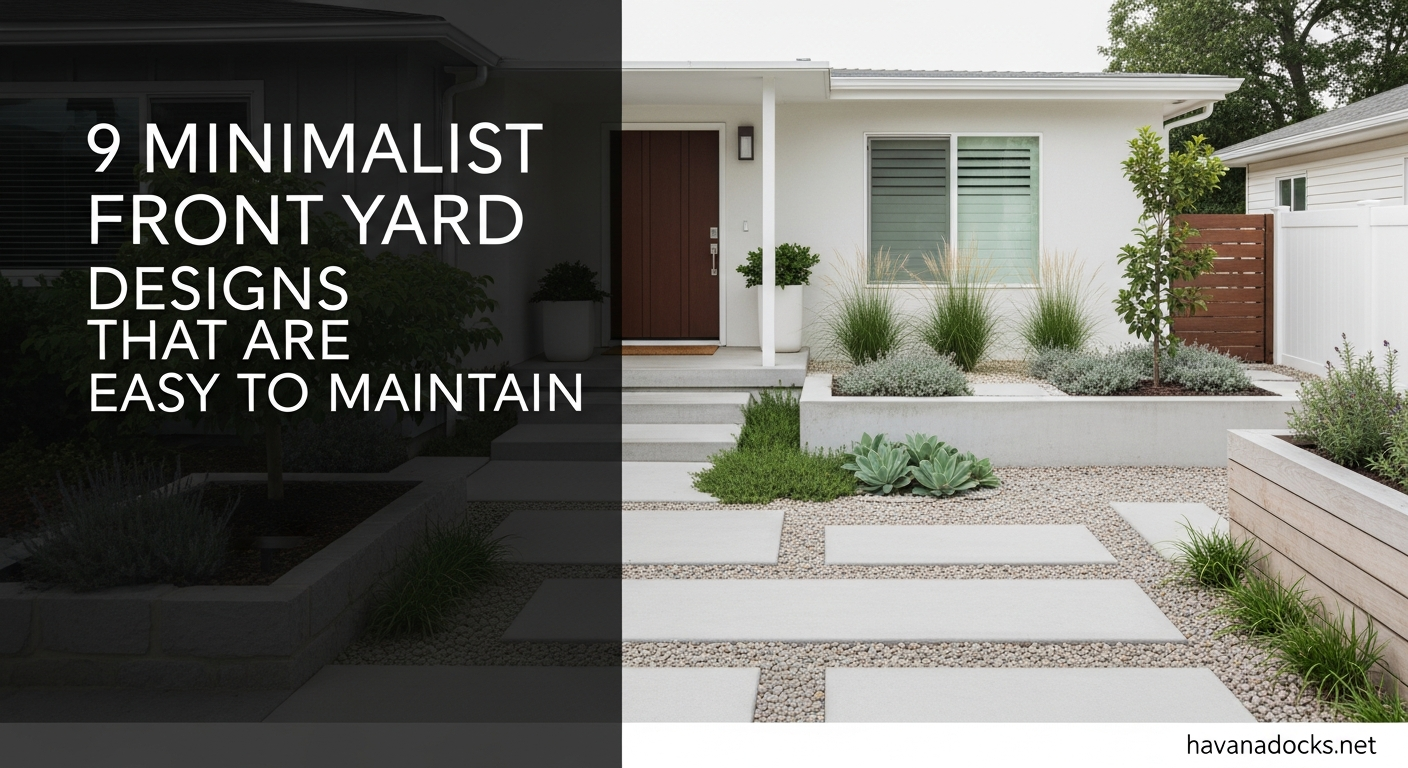
- Hardscaping Elegance: Incorporate hardscaping elements like gravel, pavers, or concrete to reduce the amount of lawn space and create defined pathways. These materials are generally low-maintenance and add structural interest to your yard.
- Color Harmony: Opt for a limited color palette to create a cohesive and calming aesthetic. Green is a natural choice, but you can also incorporate other neutral tones like gray, white, or brown.
- Focus on Texture and Form: Since color is often limited, emphasize different textures and forms to add visual interest. Use contrasting materials like smooth concrete and rough gravel to create a dynamic and engaging space.
9 Minimalist Front Yard Designs That Are Easy to Maintain
Here are nine inspiring minimalist front yard design ideas that will transform your outdoor space into a low-maintenance paradise:
1. The Gravel Garden Oasis
Embrace the simplicity of gravel for a truly low-maintenance and visually stunning front yard. Gravel gardens are drought-tolerant and require minimal upkeep, making them perfect for busy homeowners or those living in arid climates.
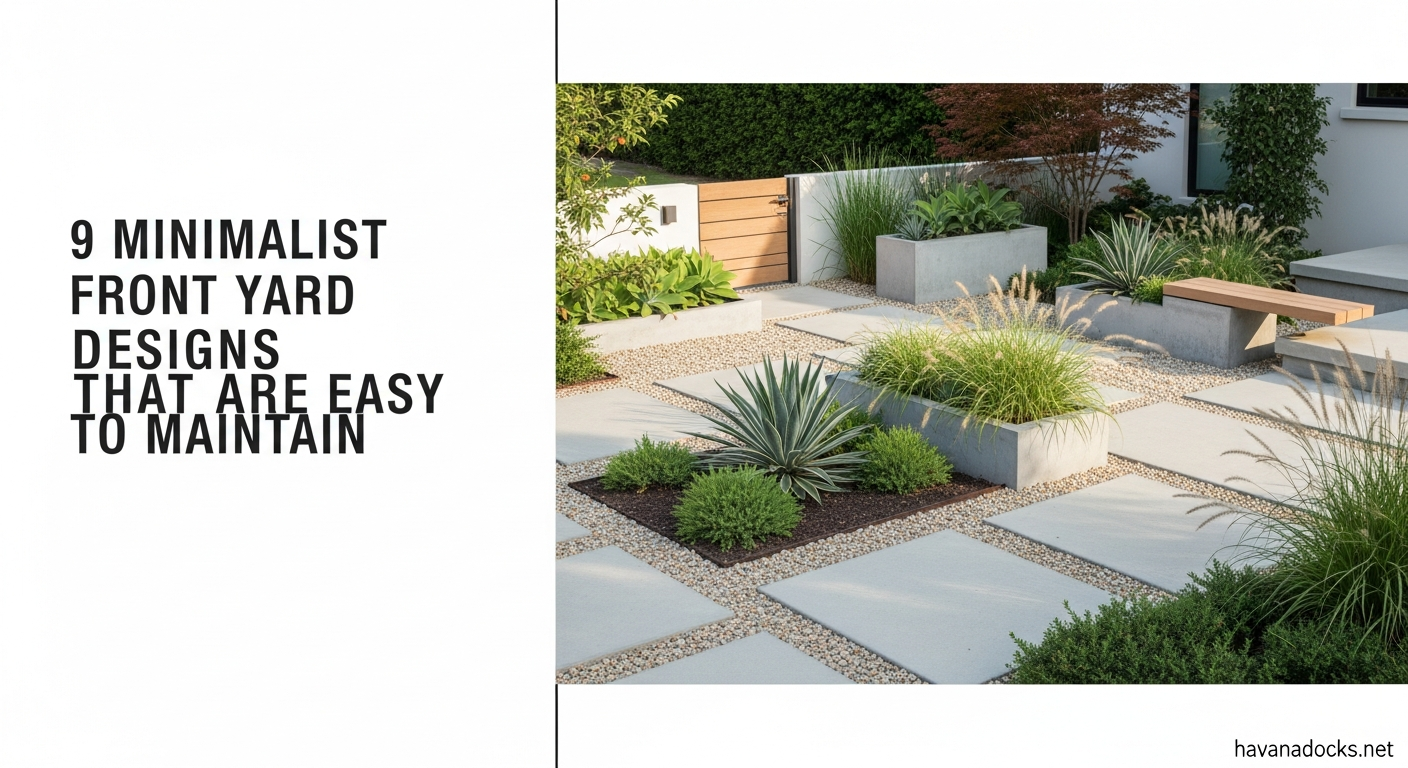
- Choose the Right Gravel: Select gravel that complements your home’s architecture and provides good drainage. Pea gravel, decomposed granite, and crushed stone are all excellent options.
- Incorporate Drought-Tolerant Plants: Pair your gravel with drought-tolerant plants like succulents, ornamental grasses, or Mediterranean herbs. These plants thrive in well-drained soil and require minimal watering. Lavender, rosemary, and sedum are great choices.
- Add Stepping Stones or Pathways: Create defined pathways through your gravel garden using stepping stones or pavers. This will make it easier to navigate the space and add visual interest.
2. The Modern Concrete Landscape
Concrete is a versatile and durable material that can be used to create sleek and modern minimalist front yards. Its clean lines and neutral color provide a perfect backdrop for showcasing simple plantings.
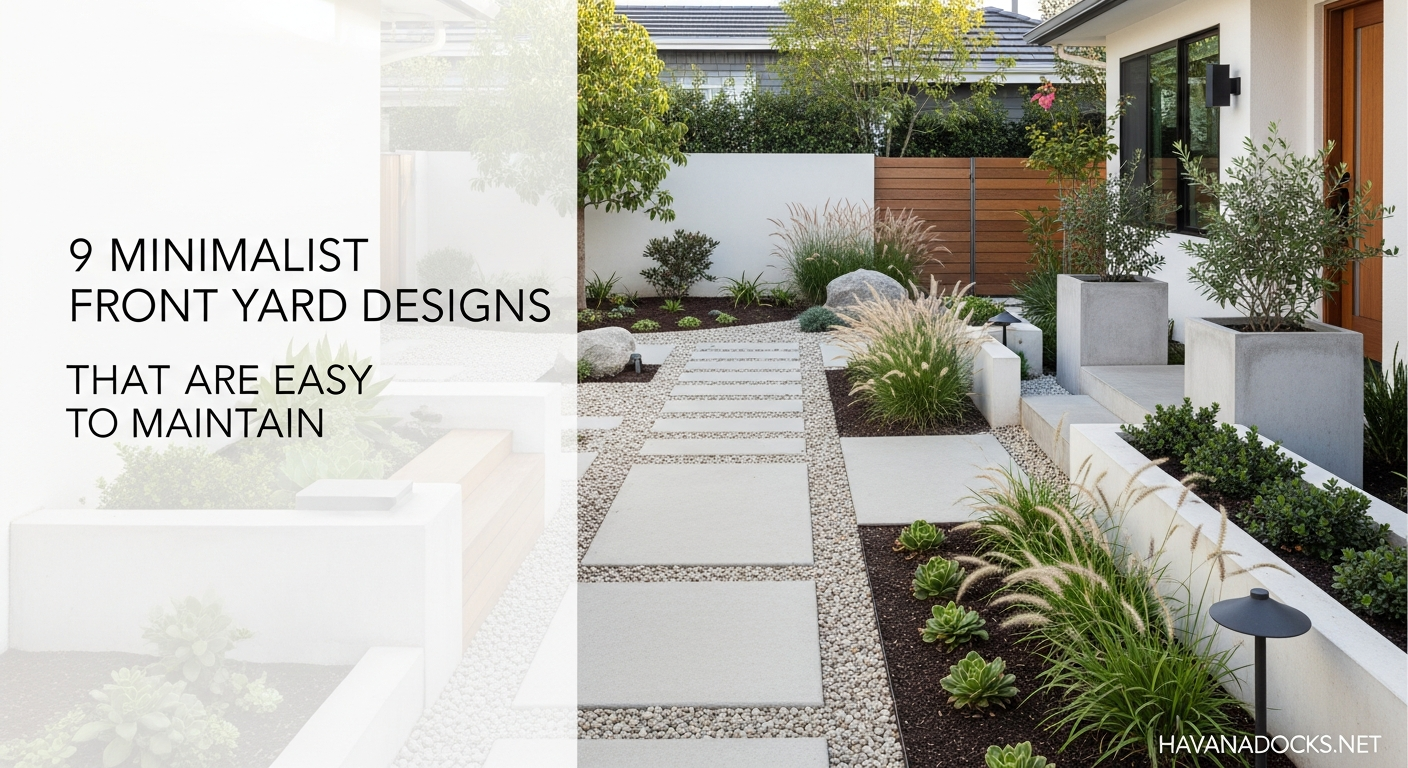
- Concrete Pavers and Slabs: Use concrete pavers or slabs to create pathways, patios, or even a minimalist lawn alternative. This reduces the amount of grass you need to mow and provides a clean, uncluttered look.
- Concrete Planters: Incorporate concrete planters of varying sizes to add vertical interest and showcase your favorite plants. Choose plants that contrast with the concrete’s color and texture.
- Minimalist Lighting: Install minimalist outdoor lighting fixtures to illuminate your concrete landscape at night. Path lights, spotlights, and string lights can create a warm and inviting ambiance.
3. The Rock Garden Zen Zone
Rock gardens are another fantastic option for minimalist front yard design. They are not only visually appealing but also require very little maintenance. The natural beauty of rocks combined with carefully selected plants creates a serene and calming atmosphere.
- Choose a Variety of Rocks: Select rocks of different sizes, shapes, and colors to create visual interest. Boulders, river rocks, and flagstone are all great options.
- Arrange the Rocks Artfully: Arrange the rocks in a natural and organic way, mimicking a mountain landscape or a dry streambed.
- Incorporate Alpine Plants: Plant alpine or rock garden plants between the rocks. These plants are adapted to rocky environments and require minimal watering. Sedums, sempervivums, and creeping thyme are excellent choices.
4. The Ornamental Grass Meadow
Create a natural and flowing landscape with an ornamental grass meadow. This design is incredibly low-maintenance and provides year-round interest with its varying textures and colors.
- Select the Right Grasses: Choose ornamental grasses that are native to your area and require minimal pruning. Switchgrass, feather reed grass, and blue fescue are popular options.
- Plant in Masses: Plant the grasses in large masses to create a dramatic and visually appealing effect.
- Minimal Pruning: Most ornamental grasses only need to be cut back once a year in late winter or early spring.
5. The Succulent Sanctuary
Succulents are the ultimate low-maintenance plants. They come in a wide variety of shapes, sizes, and colors and require very little watering, making them perfect for a minimalist front yard design.
- Choose a Variety of Succulents: Select a variety of succulents to create visual interest. Echeverias, sedums, and agaves are all great choices.
- Well-Draining Soil: Make sure the soil is well-draining to prevent root rot. Amend the soil with sand or gravel if necessary.
- Full Sun Exposure: Succulents thrive in full sun, so choose a location that receives at least six hours of sunlight per day.
6. The Japanese Garden Influence
Incorporate elements of Japanese garden design into your minimalist front yard design. Japanese gardens emphasize simplicity, tranquility, and natural beauty.
- Gravel and Stone Pathways: Create winding pathways using gravel or stepping stones.
- Moss Garden: A small moss garden can add a touch of serenity and tranquility.
- Japanese Maple Tree: A Japanese maple tree can be a stunning focal point.
- Bamboo Accents: Use bamboo screens or fences to create privacy and add a touch of Asian flair.
7. The Decomposed Granite Delight
Decomposed granite (DG) is a versatile and affordable material that can be used to create a low-maintenance and natural-looking front yard.
- Create a Pathway or Patio: Use DG to create pathways or patios. It provides a stable and comfortable surface to walk on.
- Use as Mulch: DG can also be used as mulch around plants. It helps to retain moisture and suppress weeds.
- Incorporate Boulders and Plants: Combine DG with boulders and drought-tolerant plants to create a visually appealing and low-maintenance landscape.
8. The Permeable Paver Paradise
Permeable pavers allow water to drain through them, reducing runoff and replenishing groundwater. They are a sustainable and stylish option for a minimalist front yard design.
- Choose Permeable Pavers: Select permeable pavers that complement your home’s architecture.
- Proper Installation: Ensure the pavers are properly installed with a gravel base to allow for proper drainage.
- Fill the Joints with Gravel: Fill the joints between the pavers with gravel to allow water to drain through.
- Low-Maintenance Plants: Surround the pavers with low-maintenance plants to create a green and sustainable landscape.
9. The Native Plant Haven
Create a minimalist front yard design that is both beautiful and environmentally friendly by using native plants. Native plants are adapted to your local climate and soil conditions and require minimal watering and fertilization.
- Choose Native Plants: Select native plants that are appropriate for your region.
- Create a Natural Landscape: Mimic the natural landscape of your area.
- Provide Habitat for Wildlife: Native plants provide food and shelter for local wildlife.
- Reduced Maintenance: Native plants require less maintenance than non-native plants.
Choosing the Right Plants for Your Minimalist Front Yard
Plant selection is crucial for achieving a truly low-maintenance minimalist front yard. Opt for plants that are drought-tolerant, disease-resistant, and require minimal pruning. Here are some excellent choices:
- Succulents: Echeverias, Sedums, Agaves, Aloes, and Sempervivums. These plants are incredibly drought-tolerant and come in a wide variety of shapes, sizes, and colors.
- Ornamental Grasses: Feather Reed Grass, Blue Fescue, Switchgrass, and Fountain Grass. These grasses add texture and movement to the landscape and require minimal pruning.
- Drought-Tolerant Shrubs: Lavender, Rosemary, Salvia, and Dwarf Boxwood. These shrubs are fragrant and require minimal watering.
- Groundcovers: Creeping Thyme, Sedum, and Stonecrop. These groundcovers suppress weeds and require minimal maintenance.
- Trees: Japanese Maple, Olive Tree (in warmer climates), and Crape Myrtle. Choose trees that are well-suited to your climate and require minimal pruning.
Hardscaping: The Backbone of Minimalist Design
Hardscaping elements play a significant role in minimalist front yard design. They provide structure, definition, and reduce the amount of lawn that needs to be maintained. Consider incorporating the following hardscaping elements:
- Gravel: A versatile and affordable material that can be used for pathways, patios, and mulch.
- Concrete: A durable and modern material that can be used for pavers, slabs, and planters.
- Stone: A natural and beautiful material that can be used for pathways, walls, and rock gardens.
- Pavers: Available in a variety of materials and styles, pavers can be used to create pathways, patios, and driveways.
- Boulders: Add visual interest and create a natural look.
The Importance of Proper Drainage
Proper drainage is essential for the health of your plants and the longevity of your hardscaping elements. Make sure your front yard has adequate drainage to prevent water from pooling and causing problems.
French Drains
French drains are a simple and effective way to improve drainage. They consist of a trench filled with gravel that allows water to drain away from your house.
Grading
Proper grading can also help to improve drainage. Make sure your yard slopes away from your house to prevent water from pooling near the foundation.
Lighting: Enhancing Your Minimalist Front Yard at Night
Lighting can dramatically enhance the beauty and functionality of your minimalist front yard at night. Consider incorporating the following lighting elements to create an inviting, modern, and serene outdoor atmosphere. Minimalist design thrives on simplicity, balance, and intentional placement, so the lighting choices you make should support these principles.
Start by using pathway lighting to guide visitors toward your entrance in a subtle yet impactful way. Low-profile bollard lights or recessed ground lights work exceptionally well in minimalist landscapes because they offer illumination without overwhelming the space. Placing them strategically along walkways helps create a sense of direction and highlights the clean lines typical of minimalist front yards.
Accent lighting is another important component. Use spotlights to draw attention to key architectural features, sculptural elements, or a single statement tree. Minimalist yards often incorporate just a few focal points, so accent lighting allows those pieces to stand out beautifully at night. For example, uplighting a Japanese maple or a uniquely shaped desert plant creates dramatic shadows and adds depth to your landscape.
Wall-mounted sconces are a great choice if your home’s exterior design features smooth surfaces or geometric shapes. These fixtures can provide both task lighting and decorative appeal. Choose sleek, modern designs with matte or brushed finishes to match a minimalist aesthetic. Wall sconces placed on either side of the front door also help create a warm and welcoming entrance while enhancing security.
If your front yard incorporates hardscape elements—such as stone retaining walls, steps, or concrete borders—consider adding recessed step lighting or under-cap lights. These lights are ideal for maintaining safety while contributing to a sophisticated, layered look. Minimalist yards rely heavily on clean lines and geometric forms, and integrated lighting helps highlight these structural elements without adding visual clutter.
For a softer glow, you can use ground-level wash lighting to illuminate shrubs, low hedges, or minimalist plant beds. This type of lighting spreads gently across surfaces, enhancing texture and creating a calm ambiance. It’s perfect for front yards that use gravel, ornamental grasses, or neatly arranged greenery.
Solar lights are a smart option for homeowners seeking an eco-friendly and low-maintenance solution. Modern solar fixtures have become more stylish and efficient, making them suitable for contemporary minimalist designs. Place them in areas that receive direct sunlight during the day for optimal nighttime performance.
To add a touch of elegance, incorporate warm LED strip lights under floating steps, planter edges, or along the base of your front façade. These subtle lighting solutions contribute to a glowing, streamlined effect that aligns well with minimalist principles. They also help define boundaries and create visual continuity throughout the space.
Lastly, consider smart lighting systems that allow you to control brightness, scheduling, and color temperature through your phone. Warm white tones (2700K–3000K) generally work best in minimalist settings because they create a cozy and inviting atmosphere without overpowering the clean design.
By combining these lighting elements thoughtfully, your minimalist front yard will feel more intentional, functional, and visually striking—transforming it into a peaceful retreat that stands out both day and night.
- Path Lights: Illuminate pathways and walkways for safety and security.
- Spotlights: Highlight focal points such as trees or sculptures.
- String Lights: Create a warm and inviting ambiance.
- Uplighting: Light up trees and shrubs from below to create a dramatic effect.
Choose energy-efficient LED lighting fixtures to save money and reduce your environmental impact. Solar lights are also a great option for areas where it’s difficult to run electrical wiring.
Regular Maintenance for a Long-Lasting Minimalist Landscape
While minimalist front yard design aims to reduce maintenance, some upkeep is still necessary to keep your yard looking its best. Here’s a simple maintenance checklist that will help preserve the clean lines, natural textures, and uncluttered aesthetic of your minimalist outdoor space.
1. Regular Weeding
Even with gravel, mulch, or low-growing ground covers, weeds can still appear. Make it a habit to check your yard weekly and remove any weeds before they spread. Using weed barriers beneath gravel or stones also minimizes new growth and keeps the yard tidy with minimal effort.
2. Trimming and Pruning
Minimalist landscapes often feature well-defined shrubs, sculptural plants, or neatly trimmed hedges. To maintain their intentional shapes, prune them every few weeks or at least once per season, depending on the plant variety. Keep branches from overgrowing pathways or obstructing lighting to preserve your yard’s structured look.
3. Cleaning Hardscape Surfaces
Concrete paths, stepping stones, and gravel beds accumulate dirt, fallen leaves, and debris over time. Sweep these areas regularly to maintain their clean appearance. For tougher stains or slippery spots caused by moisture, wash them with water and a mild outdoor cleaner. Power washing once or twice a year can also refresh surfaces and remove moss buildup.
4. Mulch Refreshing
If your minimalist yard includes mulch beds, remember that mulch fades and decomposes naturally. Refresh it once or twice a year to maintain even coverage and retain moisture for your plants. Choose colors that complement your minimalist palette—often black, brown, or natural wood tones.
5. Plant Health Check
Minimalist yards may use fewer plants, but each one plays a key role in the design. Check for signs of pests, rot, or disease every couple of weeks. Remove damaged leaves and ensure the soil drains properly to prevent root issues. Healthy plants maintain the balanced look essential in minimalist landscapes.
6. Watering Routine
Most minimalist front yards rely on drought-tolerant species, but they still require watering—especially during dry seasons. Create a consistent watering schedule or install drip irrigation for an efficient, low-maintenance solution. Avoid overwatering, which can lead to discoloration and disrupt the yard’s clean appearance.
7. Lighting Inspection
Outdoor lighting enhances the minimalist aesthetic at night, so ensure all fixtures are clean and functioning correctly. Wipe off dust, clear spider webs, and replace dim or dead bulbs. Check solar lights for proper sunlight exposure and adjust their position when needed.
- Weeding: Remove weeds regularly to prevent them from spreading. Hand-pulling or using a natural herbicide are good options.
- Pruning: Prune shrubs and trees as needed to maintain their shape and health.
- Mulching: Replenish mulch as needed to suppress weeds and retain moisture.
- Watering: Water plants deeply but infrequently, especially during dry spells. The key is to soak the soil thoroughly but allow it to dry out between waterings.
- Gravel Raking: Rake gravel pathways and patios to keep them looking neat and tidy.
By following these simple maintenance tips, you can keep your minimalist front yard looking beautiful for years to come. Embracing this low-maintenance approach translates to more free time and resources for other aspects of your life. Choosing the right design for a minimalist front yard can vastly improve the curb appeal of your property without the need for constant tending. Taking these suggestions and incorporating them in a way that suits your preference is a surefire way to generate a visually stunning and wonderfully simple addition to your home.
Conclusion
Creating a minimalist front yard design that is easy to maintain is achievable with careful planning and the right choices. By embracing simplicity, selecting low-maintenance plants, and incorporating durable hardscaping elements, you can transform your front yard into a beautiful and functional space that requires minimal effort. Whether you opt for a gravel garden, a concrete landscape, or a native plant haven, the key is to choose a design that suits your lifestyle and aesthetic preferences. With a little bit of creativity and planning, you can create a minimalist front yard that you will enjoy for years to come. This commitment reflects not only in the aesthetic enhancement of your property but also in the amount of time saved in yard work. Investing in a considered minimalist front yard design is a decision that rewards both the eye and the calendar.